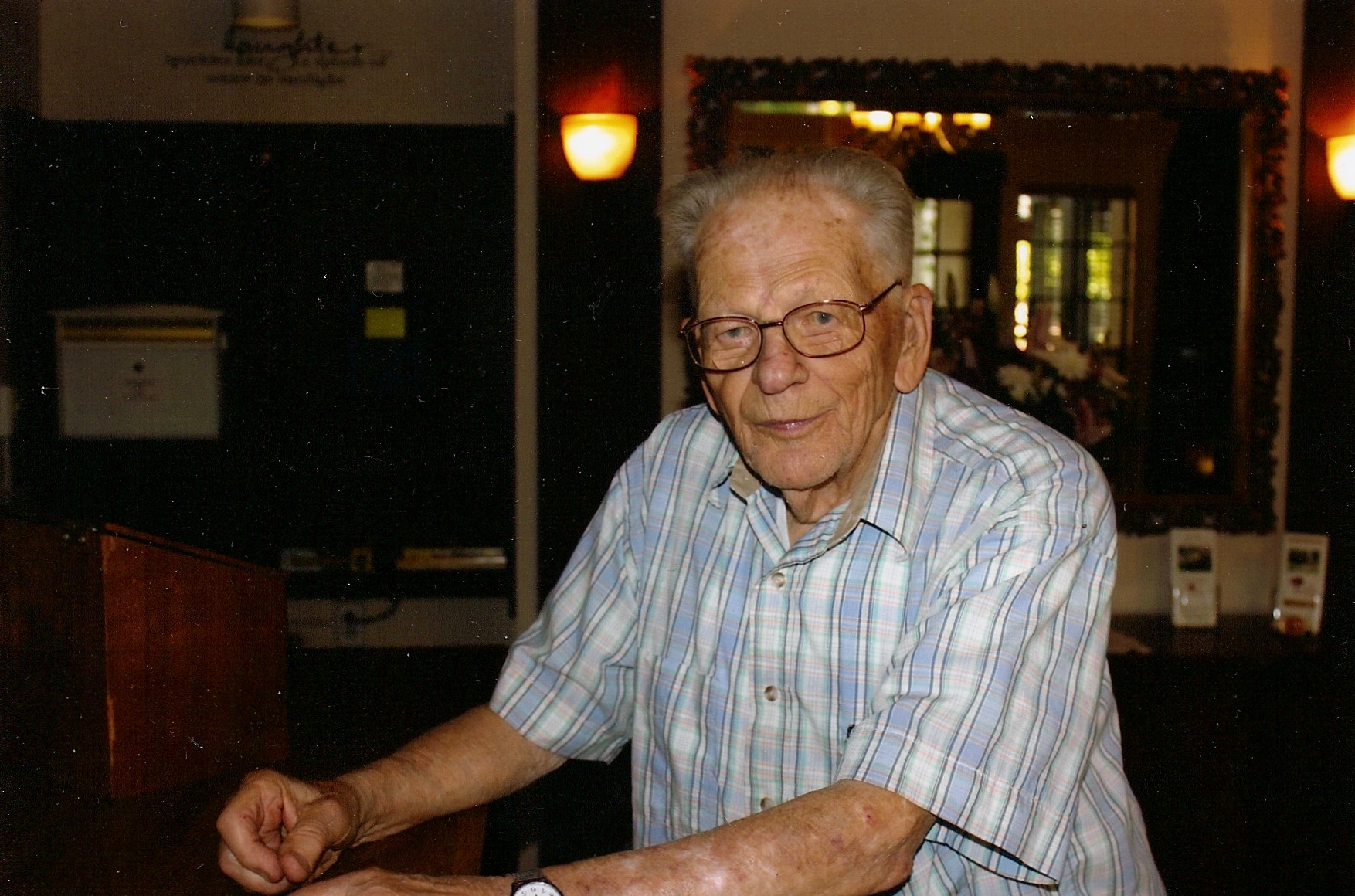
My late grandfather Charlie Zern in 2012.
I chose W6YTB as my vanity call sign in honor of the first W6YTB: my grandfather Charlie Zern. He was an amateur radio operator for 74 years until his death in November 2012 at the age of 96 and held W6YTB as his call sign for 65 of those years. I had been considering getting my ticket for a while before he passed and had talked to him about it, but hadn’t made the time to study for and take the exam. When Grandpa Charlie died, I decided to finally take the step so that I could keep his call sign – and memory – alive.
Charles Henry Zern was born in Bethlehem, Pennsylvania to Charles and Ella Zern on November 3, 1916. He was of Pennsylvania Dutch heritage, though not of the Amish or Mennonite faith. His parents were poor farmers, and he lived both with them and with his grandparents near Allentown before his family moved to New York in the early 1930s. He attended and graduated high school in Brooklyn and then enlisted in the U.S. Army in 1935.
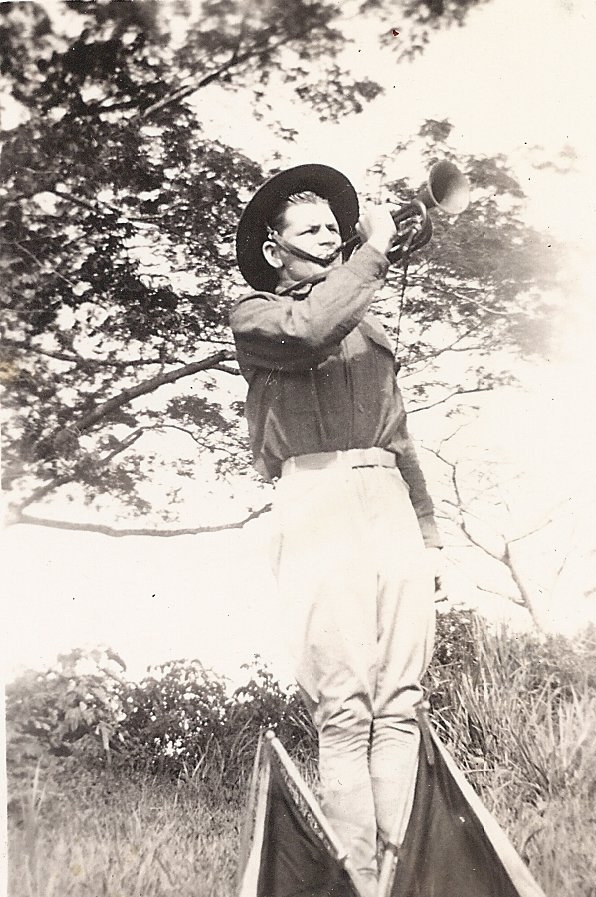
Charlie at Fort Clayton in the early 1930s.
As a new soldier, Charlie was sent to Fort Clayton in the Panama Canal Zone where he completed his basic training. He served in Panama in the Thirty Third Infantry before transferring to the Panama Signal Company. When he was returned to the States in 1938 at the end of his first enlistment, he reenlisted at Fort Monmouth, New Jersey – home of the Signal Corps School. He was assigned to the First Signal Company and because he was stationed there, he received a full year of radio theory, operating and maintenance training rather than the normal 3 months most soldiers sent to the School received.
During his time at Fort Monmouth, Charlie also first became a ham so that he could work the base’s amateur station (W2HWI). He had learned Morse Code while serving with the Panama Signal Company and with the radio training he was receiving from the Army, he was well prepared for the licensing process. He traveled up to the Federal Radio Commission (FRC) office in New York City to take the licensing exam in August 1938 and received his Class B license as W2LOI.
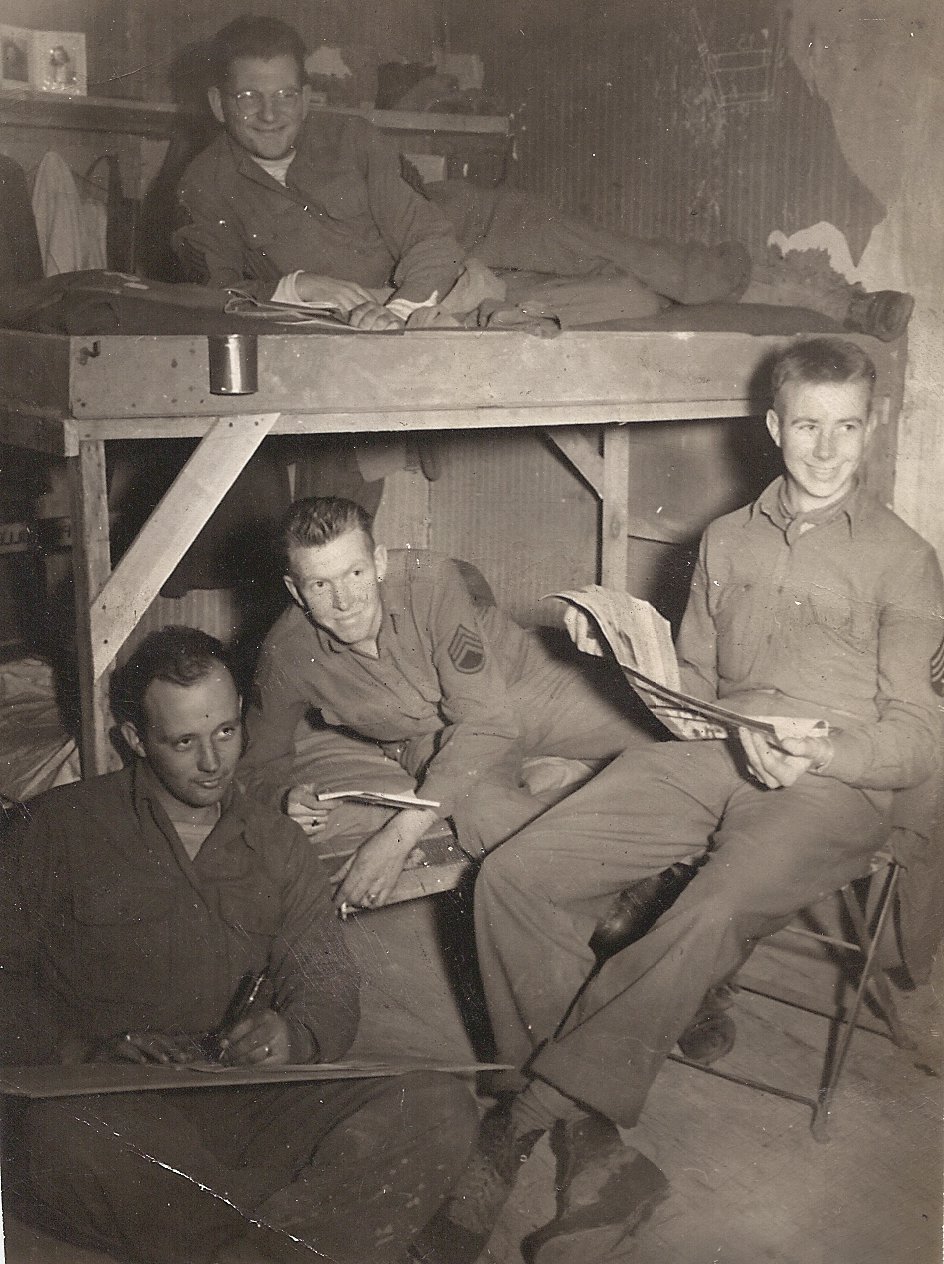
Charlie (top) and other soldiers from his unit in France in 1944.
As World War II began, Charlie was transferred to Camp Beauregard, Louisiana where he met and married his first wife (a marriage that would not last through the War). He was assigned to the 146th Armored Signal Company as part of the newly formed Sixth Armored Division, known as the “Super Sixth”. The division underwent training in Louisiana, Arkansas and California before deploying to England in February 1944 in preparation of the invasion of “Fortress Europe”. Charlie was fond of telling the story of waking up in England on the morning of June 6, 1944 and firing up his radio set to check for news from the States. When he realized he was hearing radio traffic from the ongoing D-Day invasion, he went and found his CO to tell him the news. A month later, the Super Sixth landed at Utah Beach itself and saw action in France and Belgium as part of the Normandy Campaign and during the Battle of the Bulge. The division passed into Germany in January 1945 and was involved in heavy fighting during the last months of the war in Europe. Charlie himself was wounded in combat near Osterfeld, Germany on April 7 and received the Purple Heart. It was around this same time that the Super Sixth liberated the Buchenwald Concentration Camp.
Charlie was also fond of telling the story of how he met General George S. Patton. The Super Sixth was part of Patton’s Third Army, and one day Charlie was walking with two fellow NCOs when the General’s Jeep drove up. Patton offered a ride to the NCOs, but because only two of the three could fit in his Jeep, they flipped a coin and Charlie was the unlucky one. But he considered it a great honor to meet Patton all the same.
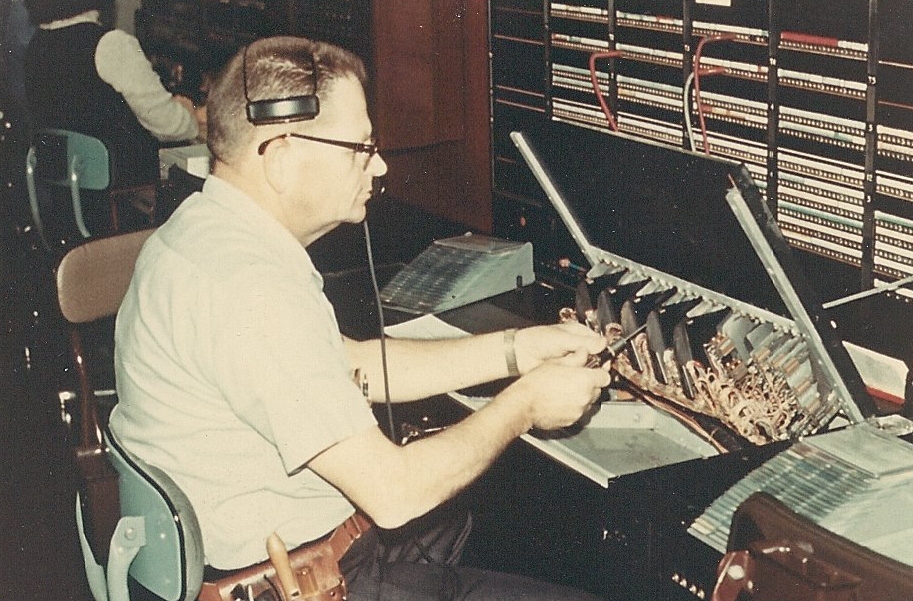
Charlie working at Bell Telephone in 1966.
Because of his pre-War service, Charlie was one of the first group of soldiers released from duty after V-E Day, receiving his Honorable Discharge in June 1945. He returned to the States and moved to California, where he started working for the Bell Telephone Company in 1946. He would work for “Ma Bell” – both in Hollywood and Pasadena – for 33 years until his retirement in 1979. He was an “inside man”, working in various operations and repair roles on telephone equipment and putting to use the electronics knowledge he had learned in the Army.
Charlie had let his amateur radio license lapse while in Europe, so after moving to California he re-licensed in January 1947 as W6YTB. His Class B license was converted to a General license during the 1951 restructuring, and he upgraded to an Advanced license in the late 1960s or early 1970s.
In the early 1950s, Charlie met the three kids of a single mother through his volunteer work with the Boy Scouts. These children were my father Hal Gaylord, his brother Frank and his sister Nan. They took a liking to him and thought he’d be a good match for their mother, so they brought him home. Charlie and my Grandma Anne were married in September 1953.
As an aside, Anne herself had an interesting amateur radio connection. She grew up in Newington, Connecticut and her father was an early ham. So early, in fact, that his Elmer was Hiram Percy Maxim himself and his call sign was 1VY.
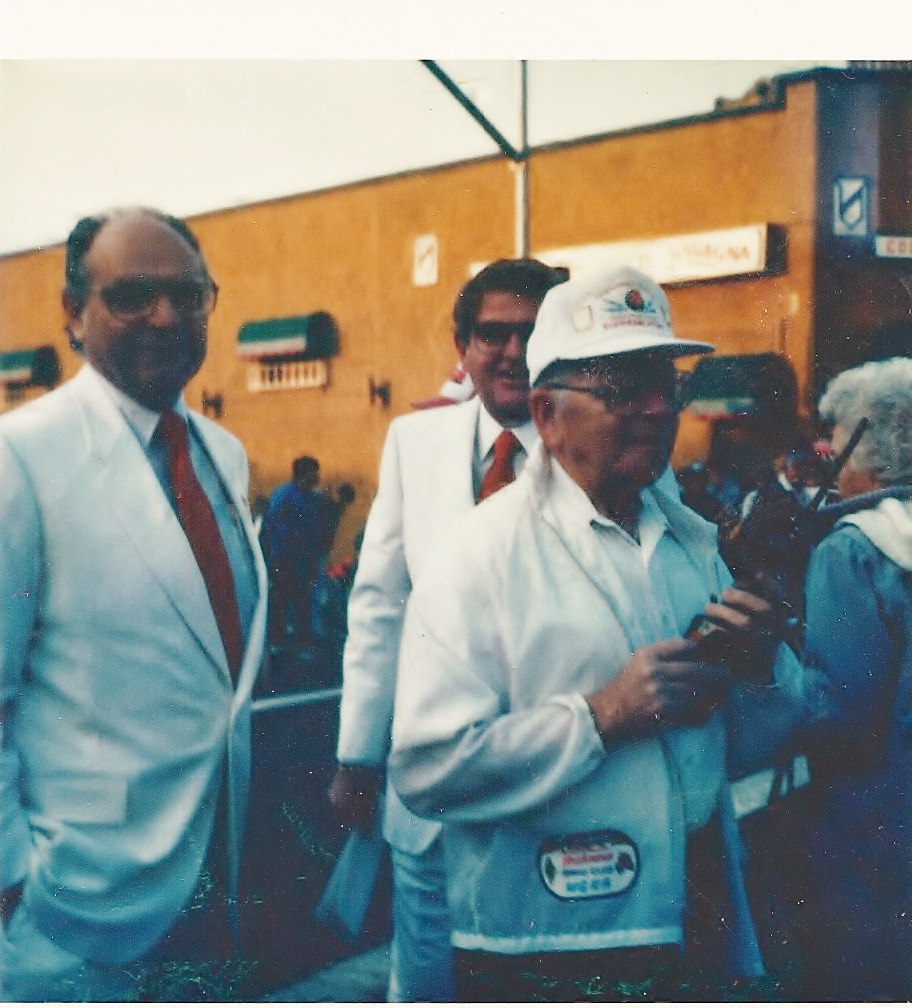
Charlie working event communications at the 1987 Rose Parade.
Initially, Charlie was a member of Bell’s TELCO Radio Club (W6MPH) and the San Gabriel Valley Radio Club (W6QFK) before joining the Pasadena Radio Club (W6KA) in 1968. He was an active member of the Pasadena club throughout the rest of his life, attending meetings up the month of his death. He also served as a volunteer for the Tournament of Roses Radio Amateurs (TORRA) from 1984 to 1993 providing communications support to the annual Rose Parade and Rose Bowl game. Charlie was active in several other groups as well. As mentioned above, he volunteered with the Boy Scouts of America (including mentoring Scouts working on their radio merit badges). He also wired and ran the sound systems at First Congregational Church of Pasadena, the Pasadena Masonic Lodge and the Pasadena Scottish Rite. He was a long-time Freemason and was Past Master of the Pasadena Lodge and a 33rd Degree Master Mason through Scottish Rite, where he also served as the live-in caretaker for several years. He was honored with the Hiram Award by his Lodge in 1992 for his Masonic service.
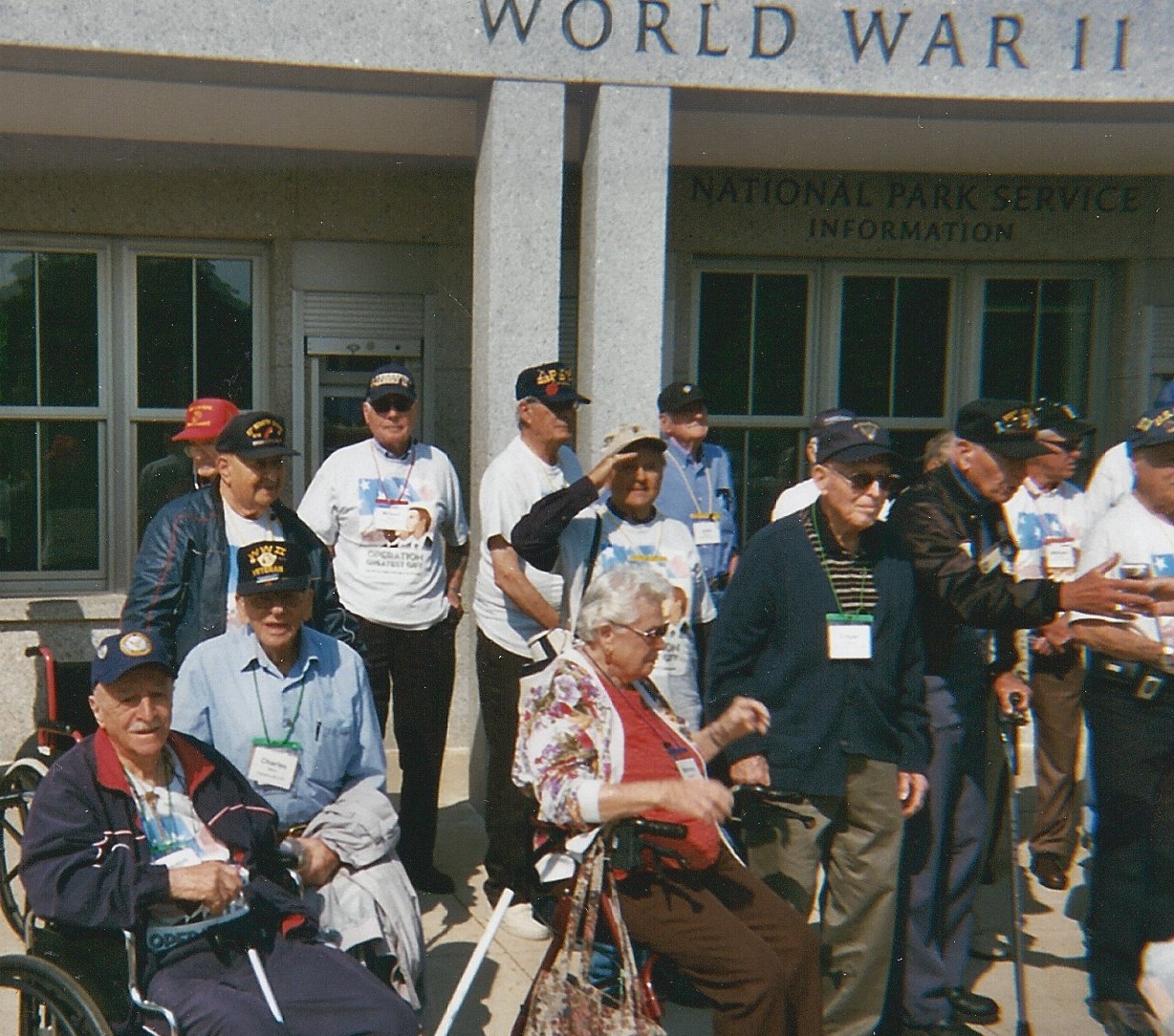
Charlie (sitting 2nd from left) and other vets at the National WWII Memorial in Washington D.C. in 2010.
Charlie was active and vibrant until his last days. Even into his 90s, he would walk several miles a day, take the train to downtown Los Angeles and work CW and phone on several local nets. He told me many times “I don’t know what I’ll do when I get old and can’t do things anymore” – he truly did not consider 96 old. His death came suddenly, which was a blessing because he never did have to slow down.
Charlie was a wonderful grandfather and an inspiration to me in many ways. Even though he is a silent key now, I’m sure he will continue to be an inspiration to me as I explore the world of amateur radio. Because of his meticulous record keeping, I have several mementos of his amateur radio work including QSL cards, notes, interviews – and his original W2LOI and W6YTB license cards from 1938 and 1947 respectively. His last license is framed and hanging on the wall next to mine and serves as a reminder of his legacy and his love.
73.
 W6YTB
W6YTB 
My grandfather Harold Saletan was part of the 146 Armored Signal Co. He spoke very little about his military experience. I was curious if you have more information about the unit.
Best Regrds,
Marc F
Friedbergny@aol.com
Marc, I sent you an email with a little more details, but most of the information I have comes from http://www.super6th.org/146thsig/, which is an electronic version of the unit history booklet that was written in 1945. Hope this helps.